
Listening at the lingual frontier
September 14, 2026
Subscribe to our newsletter
If you want to get the latest news from the Uniting Church in Australia then subscribe to our weekly newsletter delivered to your inbox.
What does it mean to listen when the person we are seeking to relate to speaks a different first language, and also understands the world through a different linguistic and cultural framework?
It is a question Howard Amery has been exploring for more than four decades, and one he will bring to the inaugural Rev Dr Michelle Cook Lecture and Workshops on 1 October, ahead of the 48th Meeting of the Northern Synod.
Howard’s workshop presentation, “Covenant relationships at the Lingual Frontier: Reckoning with the presence and absence of counting numbers in the telling of stories about the origins of God’s world”, will invite participants to reflect on and think about language, worldview, First Peoples and what it means to listen deeply.
Howard describes the meeting point between different languages, cultures and worldviews as the “lingual frontier”.
A language researcher, lexicographer and community educator, Howard has worked in partnership with Yolŋu people in northeast Arnhem Land for more than 40 years. His work has included community education, language research, dictionary writing, and supporting education and training with First Peoples in the communities and homelands where they live.
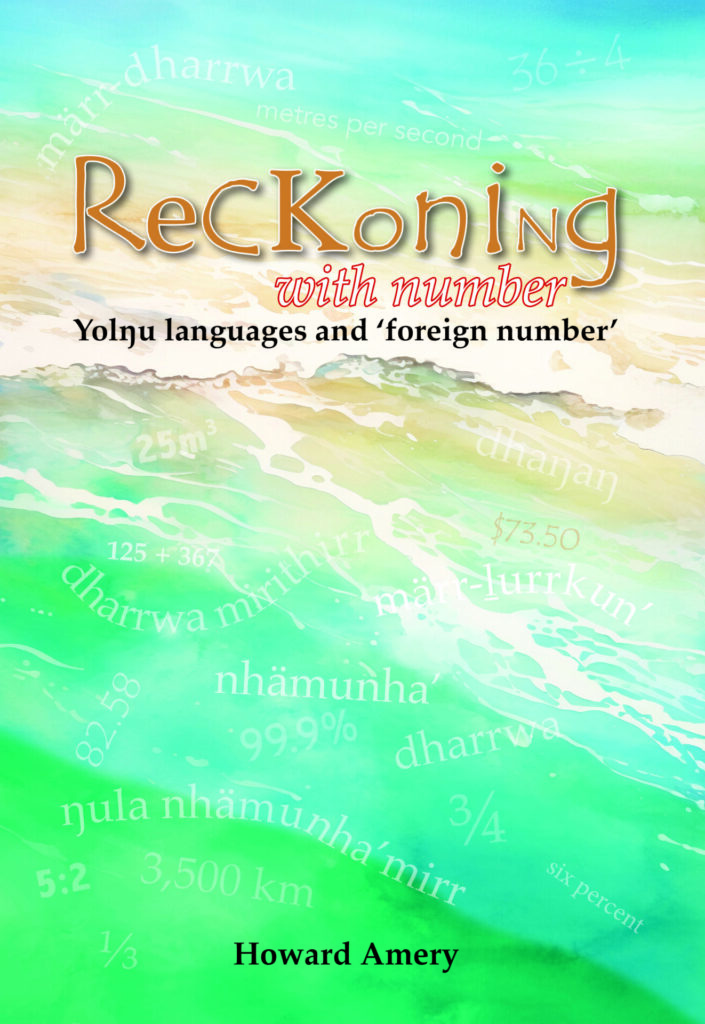
His recent book, Reckoning with Number: Yolŋu Languages and ‘foreign number’, grew out of this long engagement with language and culture.
For Howard, the lingual frontier is about much more than simply finding the right words.
Language shapes how people understand the world, communicate meaning and engage with concepts such as time, kin relationships and mathematics. In the Northern Territory, this meeting point is particularly significant, as first language speakers of Indigenous languages live, work and worship alongside of first language speakers of English. But, as First and Second Peoples, we live in different conceptual worlds.
Numbers are part of this difference in thinking, and Howard’s research explores how Yolŋu and other Australian Indigenous languages express quantities and number differently from English.
In English, and almost all of the world’s languages, the presence of counting numbers allows us to quantify precisely, but these quantitative base-10 numbers also sit alongside of qualitative numbers such as “few” or “many”. Howard’s research examines how Yolŋu languages only have qualitative expressions of number, and no counting words.
This difference has major implications for education, governance and participation in contemporary life. It also raises questions for the Church about how language shapes the way we understand and also communicate our faith.
If language shapes how we understand reality, then differences in language can also shape how stories about reality – including stories about God and creation – are told and understood.
Howard will explore this through stories of creation from different traditions, including Genesis. Genesis 1 describes creation through a sequence of numbered days, while Genesis 5 records the fantastic ages of the patriarchs from Adam to Noah. Howard will consider these examples alongside First Peoples’ origin stories that communicate about creation without any reference to numbers or quantitative sequence.
Howard says this is not simply an exercise in linguistics or biblical interpretation. It raises deeper questions about how First and Second Peoples encounter one another and the implications for covenant relationships.
“We all have a first language, the language that we think in” he says. “So, when we receive new information, we want to hear it in our first language …. not in French or Swahili.”
“What does it mean to take first languages seriously?”
For Howard, this question has practical implications for the Uniting Church, particularly in the Northern Synod. Where First Peoples communities and English-speaking communities share ministry, worship and community life, language is an integral part of this relationship.
Howard believes genuine covenant relationships require people to move beyond the assumption that communication difficulties are simply the result of inadequate schooling.
“When we do covenanting, first language matters,” Howard says. “So, primarily, it’s about first languages and not about Aboriginality or about culture.”
Language, Howard says, also shapes how we understand relationships and theology.
“Language informs our worldview, how we think about the world, how we derive meaning,” he says. “And hence when we think about God and do theology, then… the words we have at our disposal inform that theology.”
Taking language seriously requires a different approach to the way that we listen. It means being prepared to not to understand everything immediately, and to resist the temptation to make our conversations and other communication conform to the dominant language.
“The listener or the conversation partner… has to feel a bit uncomfortable,” Howard says. Rather than forcing Indigenous people to speak in English, Howard argues for creating space for people to communicate in their first language and also allowing time for relationships to develop.
“The answer is time. Spend time together, a lot of time …. and it’s deep listening,” he says.
That lesson has stayed with Howard since his early community development work.
“One of the lecturers told us to ‘listen, listen, and listen again’,” he recalls. “So that’s what I’ve tried to do over the course of four-plus decades.”
Howard believes covenant at the lingual frontier requires more than acknowledging cultural difference. It requires humility, patience and a willingness to take first languages seriously.
Howard hopes those attending the workshop will leave with a greater understanding of the reality of the lingual frontier and its significance for the Northern Synod, as well as new questions about covenanting with First Peoples, language and the assumptions we bring to relationships.
At a Synod gathering whose theme asks, “Are you listening?”, Howard’s presentation offers a challenging invitation: to recognise that we do not all hear, speak or understand the world in the same way.
For Howard, genuine listening begins with the humility to acknowledge that difference – and the patience to stay in the relationship long enough to begin to hear.
Register here to catch Howard’s workshop in-person or online.
His book, Reckoning with Number: Yolŋu Languages and ‘foreign number’ will be available for purchase at the workshop, or you can order here.
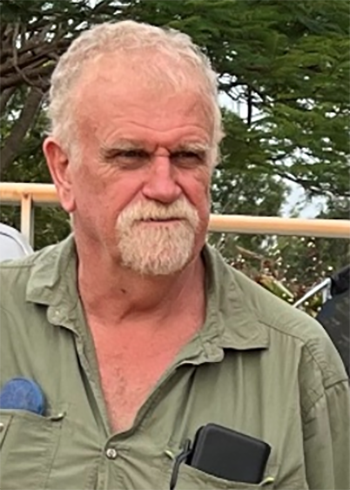
Howard Amery
More news from the Assembly
From where will liturgical renewal come?
From where will liturgical renewal come? By Matthew Julius, Liturgical Renewal Project Lead I recently attended the Australian Academy of Liturgy (AAL) conference, Liturgy Under the Southern Cross. AAL brings together liturgical scholars from different churches across Australia to reflect on Christian worship and its connections to the “public work” of the church (which…
President's pastoral message following Helen Haines attack
President’s pastoral message following attack In the aftermath of the attack on Helen Haines MP, Rev Charissa Suli has released this message and prayerAs we continue to hold Dr Helen Haines MP, her husband Phil, and their family and the Wangaratta community in our prayers, we recognise the profound suffering caused by this devastating attack…
Receiving the Gift of the Spirit
Receiving the Gift of the SpiritReflections on two years as General SecretaryBy Andrew JohnsonTwo years ago, I stood before the 17th Assembly of the Uniting Church in Australia and accepted the call to serve as General Secretary. I spoke of the commitments I hoped would shape my leadership: our Covenant with First Peoples, our calling…
Prayers for Helen Haines MP
Prayers for Dr Helen Haines, MP A prayer from the National President, Rev Charissa Suli.I invite the Uniting Church across Australia to pray for Helen Haines, the independent Federal Member for Indi, following a serious incident outside her electorate office in Wangaratta on Monday afternoon. We hold Helen, her family, friends,…
Celebrating 60 Years Since the Ordination of Dr D'Arcy Wood
Celebrating 60 Years Since the Ordination of Dr D’Arcy Wood A Lifetime of Service: Celebrating 60 Years Since the Ordination of Dr D’Arcy Wood This year marks the 60th anniversary of the ordination of Rev. Dr Harold D’Arcy Wood, one of the most respected theologians, church leaders and ecumenists in the…
Stewards of God’s Creation
Stewards of God’s Creation Mount Eliza congregation takes practical steps towards net zero At The Village Church Mount Eliza caring for God’s creation is part of everyday church life. Located on Victoria’s Mornington Peninsula, the congregation has embraced the Uniting Church’s call to climate action by taking practical steps to…
Eight Years On: Marking the National Apology to Victims and Survivors of Child Sexual Abuse
Eight Years On: Remembering the National Apology to Victims and Survivors of Child Sexual Abuse A liturgy and statement from President Rev Charissa Suli to mark the Anniversary of the historic statement.Eight years after the National Apology to Victims and Survivors of Institutional Child Sexual Abuse, the Uniting Church in Australia joins communities across the…
President's Pastoral Prayer for Pope Leo XIV
President’s Pastoral Prayer for Pope Leo XIV By President Rev Charissa SuliAs we hold Pope Leo XIV in our prayers during this time of illness and recovery, we join with our Catholic siblings in Christ or Catholic Community around the world expressing our ecumenical solidarity and care. As part of the wider Christian Church, we share…