
Listening at the lingual frontier
September 14, 2026
Subscribe to our newsletter
If you want to get the latest news from the Uniting Church in Australia then subscribe to our weekly newsletter delivered to your inbox.
What does it mean to listen when the person we are seeking to relate to speaks a different first language, and also understands the world through a different linguistic and cultural framework?
It is a question Howard Amery has been exploring for more than four decades, and one he will bring to the inaugural Rev Dr Michelle Cook Lecture and Workshops on 1 October, ahead of the 48th Meeting of the Northern Synod.
Howard’s workshop presentation, “Covenant relationships at the Lingual Frontier: Reckoning with the presence and absence of counting numbers in the telling of stories about the origins of God’s world”, will invite participants to reflect on and think about language, worldview, First Peoples and what it means to listen deeply.
Howard describes the meeting point between different languages, cultures and worldviews as the “lingual frontier”.
A language researcher, lexicographer and community educator, Howard has worked in partnership with Yolŋu people in northeast Arnhem Land for more than 40 years. His work has included community education, language research, dictionary writing, and supporting education and training with First Peoples in the communities and homelands where they live.
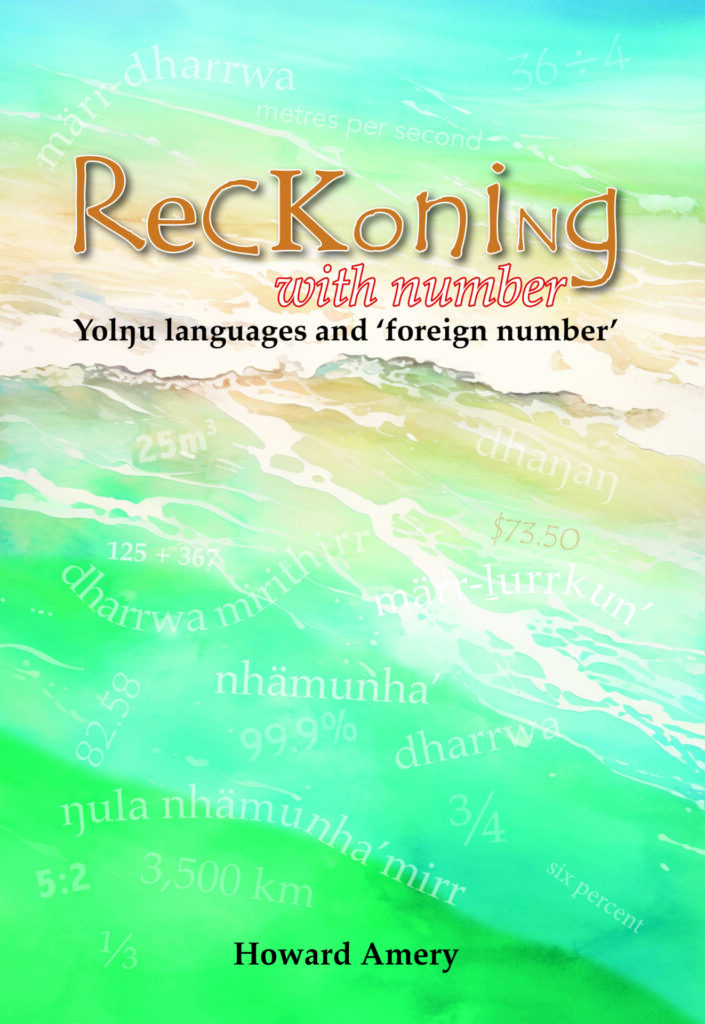
His recent book, Reckoning with Number: Yolŋu Languages and ‘foreign number’, grew out of this long engagement with language and culture.
For Howard, the lingual frontier is about much more than simply finding the right words.
Language shapes how people understand the world, communicate meaning and engage with concepts such as time, kin relationships and mathematics. In the Northern Territory, this meeting point is particularly significant, as first language speakers of Indigenous languages live, work and worship alongside of first language speakers of English. But, as First and Second Peoples, we live in different conceptual worlds.
Numbers are part of this difference in thinking, and Howard’s research explores how Yolŋu and other Australian Indigenous languages express quantities and number differently from English.
In English, and almost all of the world’s languages, the presence of counting numbers allows us to quantify precisely, but these quantitative base-10 numbers also sit alongside of qualitative numbers such as “few” or “many”. Howard’s research examines how Yolŋu languages only have qualitative expressions of number, and no counting words.
This difference has major implications for education, governance and participation in contemporary life. It also raises questions for the Church about how language shapes the way we understand and also communicate our faith.
If language shapes how we understand reality, then differences in language can also shape how stories about reality – including stories about God and creation – are told and understood.
Howard will explore this through stories of creation from different traditions, including Genesis. Genesis 1 describes creation through a sequence of numbered days, while Genesis 5 records the fantastic ages of the patriarchs from Adam to Noah. Howard will consider these examples alongside First Peoples’ origin stories that communicate about creation without any reference to numbers or quantitative sequence.
Howard says this is not simply an exercise in linguistics or biblical interpretation. It raises deeper questions about how First and Second Peoples encounter one another and the implications for covenant relationships.
“We all have a first language, the language that we think in” he says. “So, when we receive new information, we want to hear it in our first language …. not in French or Swahili.”
“What does it mean to take first languages seriously?”
For Howard, this question has practical implications for the Uniting Church, particularly in the Northern Synod. Where First Peoples communities and English-speaking communities share ministry, worship and community life, language is an integral part of this relationship.
Howard believes genuine covenant relationships require people to move beyond the assumption that communication difficulties are simply the result of inadequate schooling.
“When we do covenanting, first language matters,” Howard says. “So, primarily, it’s about first languages and not about Aboriginality or about culture.”
Language, Howard says, also shapes how we understand relationships and theology.
“Language informs our worldview, how we think about the world, how we derive meaning,” he says. “And hence when we think about God and do theology, then… the words we have at our disposal inform that theology.”
Taking language seriously requires a different approach to the way that we listen. It means being prepared to not to understand everything immediately, and to resist the temptation to make our conversations and other communication conform to the dominant language.
“The listener or the conversation partner… has to feel a bit uncomfortable,” Howard says. Rather than forcing Indigenous people to speak in English, Howard argues for creating space for people to communicate in their first language and also allowing time for relationships to develop.
“The answer is time. Spend time together, a lot of time …. and it’s deep listening,” he says.
That lesson has stayed with Howard since his early community development work.
“One of the lecturers told us to ‘listen, listen, and listen again’,” he recalls. “So that’s what I’ve tried to do over the course of four-plus decades.”
Howard believes covenant at the lingual frontier requires more than acknowledging cultural difference. It requires humility, patience and a willingness to take first languages seriously.
Howard hopes those attending the workshop will leave with a greater understanding of the reality of the lingual frontier and its significance for the Northern Synod, as well as new questions about covenanting with First Peoples, language and the assumptions we bring to relationships.
At a Synod gathering whose theme asks, “Are you listening?”, Howard’s presentation offers a challenging invitation: to recognise that we do not all hear, speak or understand the world in the same way.
For Howard, genuine listening begins with the humility to acknowledge that difference – and the patience to stay in the relationship long enough to begin to hear.
Register here to catch Howard’s workshop in-person or online.
His book, Reckoning with Number: Yolŋu Languages and ‘foreign number’ will be available for purchase at the workshop, or you can order here.
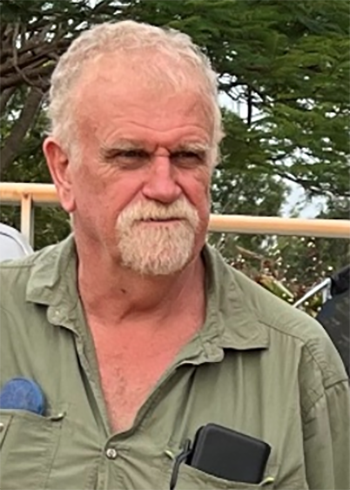
Howard Amery
More news from the Assembly
COP31: A Call to Prayer for Climate Justice
COP31: A Call to Prayer for Climate Justice Uniting Church congregations invited to pray for a just outcome at COP31 By Paul Wallbank As world leaders gather for the United Nations Climate Change Conference (COP31) in Antalya, Türkiye, the Uniting Church in Australia invites congregations to pray for a just and meaningful outcome to…
Prayer & Pacific leadership for Climate Justice at COP31
Prayer & Pacific leadership for climate justice at COP31Following visits to Tuvalu and Fiji, Uniting Church President Rev Charissa Suli led morning prayers with Pacific partners at the Moana Blue Pacific Pavilion as COP31 opened in Antalya.“Are we genuinely listening to First Peoples, respecting their leadership and supporting their right to determine their own futures?”…
Defence chaplains find space for reflection, renewal and fellowship
Defence Force Chaplains retreat 2026Finding time to pause, reflect and reconnect is important in any ministry, particularly one shaped by the demands and complexities of military life. For Uniting Church Defence Force chaplains, the annual Faith Group Spiritual Conference held at Holsworthy Barracks’ All Saints’ Chapel last week provided such an opportunity, bringing colleagues together…
CFTL prepares for discernment on theological education
CFTL prepares for discernment on theological educationSubscribe to our newsletterIf you want to get the latest news from the Uniting Church in Australia then subscribe to our weekly newsletter delivered to your inbox.The Commission for Theology, Formation and Leadership (CFTL) met online on 29 October. Since its previous meeting, the Admission of Ministers Working Group…
New book on the life of Walter Lawry
New book on Walter Lawry, pioneer Wesleyan missionary to TongaA new book exploring the life and legacy of the first Wesleyan missionary to Tonga has been released, bringing fresh insight into an important chapter of the Uniting Church’s shared Methodist heritage and its enduring relationships with the Pacific. Walter Lawry: The First Wesleyan Missionary to…
2027 Calendar of Dates
2027 Assembly Calendar of Dates Official Uniting Church commemorations, key liturgical dates, ecumenical dates and events, social and cultural celebrations On this page you will find the 2027 dates for the key days we mark together as a national Uniting Church, events held around the Uniting Church that are open to all, key liturgical dates,…
2026-2027 Uniting Church Lectionary
2026-2027 Uniting Church Lectionary available now The Assembly has released the 2026-2027 Uniting Church Lectionary (Year B), a key resource for preaching and worship leading in the ‘Year of Mark’ The 2026-2027 Uniting Church Lectionary is now available to download from the Assembly. This year’s Year B lectionary continues with the new-look poster format…
Filipino National Conference 2026: Weaving a future together
Filipino National Conference 2026: Weaving a future Generations of Filipino Uniting Church members gathered to celebrate faith, culture and community, while weaving a shared vision for an intercultural future Three days of worship, storytelling, cultural celebration and discernment have brought together generations of Filipino members of the Uniting Church, as the Filipino National Conference…