
Caring for the Tongan Disability Community
Kim Muller shares insights on faith, dignity and the urgent needs of those within the Tongan disability community
January 28, 2026
by Kim Muller, Occupational Therapist in New South Wales
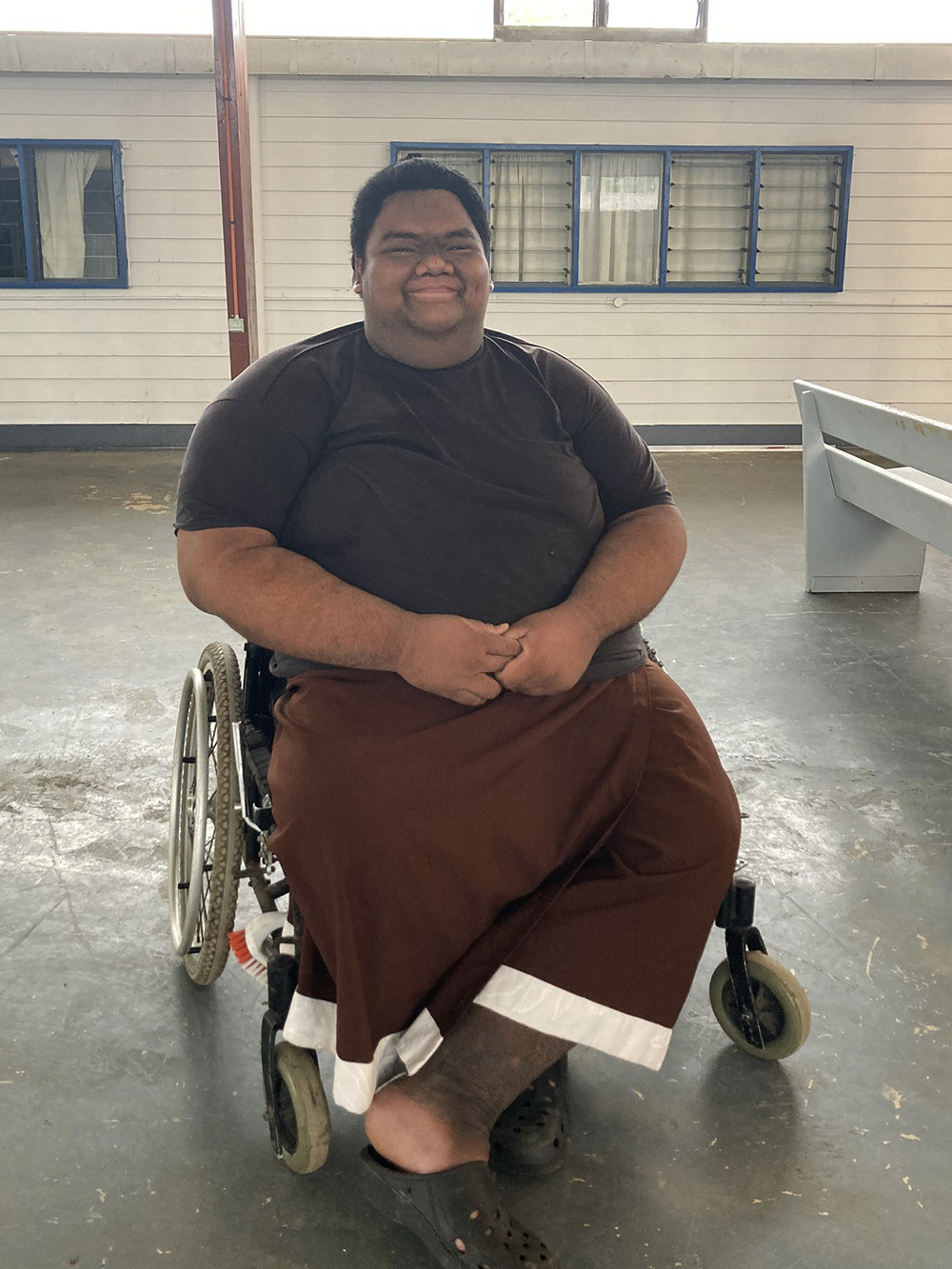
My visit to The Alonga Centre in Tonga offered a profound glimpse into the realities, challenges, resilience and faith of the Tongan disability community. In speaking with Paula Fuahau, a permanent resident and the Centre’s volunteer communications manager, I was struck by both the humility and strength that underpin daily life here.
From the beginning, I sensed God’s hand guiding our encounter. When no staff came forward to speak with us, Paula explained that, in Tongan culture, workers at disability centres often feel they do not have the authority to speak on behalf of people living with disability. Out of humility, they would not step forward or promote themselves, even when invited to do so. What first seemed like silence soon revealed a deeper purpose – it was, I believe, divinely orchestrated that I would meet Paula himself: someone who lives with disability and can speak directly to The Alonga Centre’s needs with clarity.
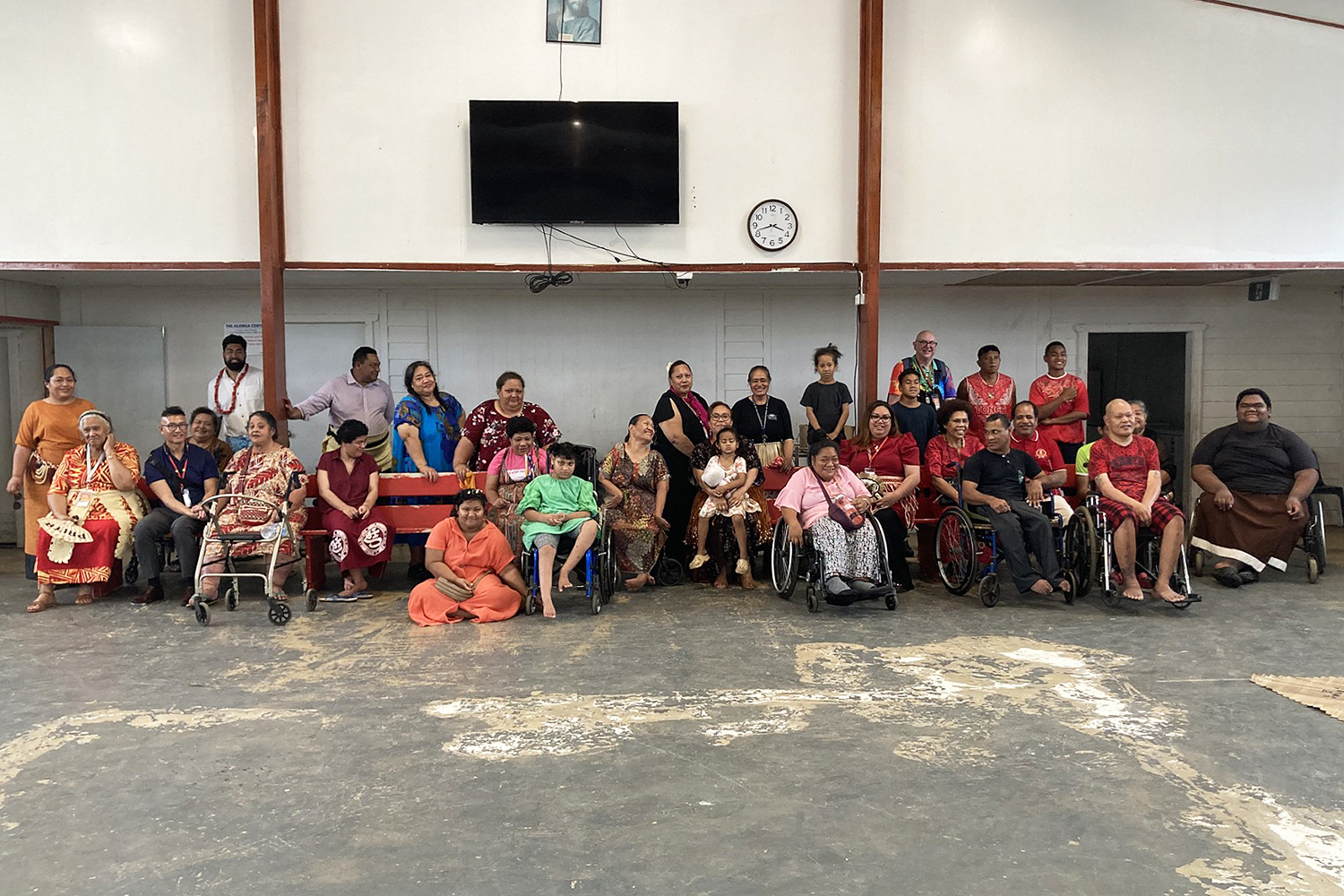
Paula shared that the Alonga Centre is sustained entirely by the generosity of volunteers. Each day, just three volunteer workers provide essential care for around 30 residents – preparing meals and assisting with daily routines. The ratio of one volunteer to 10 residents made the Centre’s immense need for human resources immediately clear.
Many of the residents live with significant physical, intellectual or psychosocial disabilities, requiring ongoing, skilled, and compassionate support. On our way back to the hotel, I spoke with another conference delegate, who shared that psychological care is not yet recognised within Tongan culture and that no formal mental health services are available. This deeply unsettled me. As an occupational therapist working in the disability sector in Australia, I’ve seen firsthand how physical disabilities often coexist with psychological challenges – the emotional toll of limited access, participation, and independence can be profound. Without psychological support, these difficulties only deepen, compounding the impact of disability and further marginalising an already vulnerable community.
Paula also shared that every Tuesday, members of the Free Wesleyan Church visit the Centre, bringing fellowship and connection. These visits, he said, are deeply cherished by the residents, as they make them feel seen, heard, loved, and cared for. His gentle but heartfelt plea was for more visitors – not only from local churches but also from the wider community, including international groups like the UCA as such visits help to strengthen the residents’ sense of inclusion and belonging.
Hearing this touched me deeply. Paula’s words were a beautiful reminder of how powerful simple presence can be – how companionship, offered in love, becomes a living expression of Christ’s hands bringing comfort, dignity, and healing.
Paula also spoke about the Centre’s unwavering commitment to preserving the dignity of its residents. The founders of Alonga were deeply determined that no resident would ever need to beg for financial support – a principle that continues to guide their work and values today. To support this vision, I suggested exploring alternative fundraising avenues external to the Centre, ones that would uphold the residents’ dignity and self-respect. Paula was receptive and encouraged by these ideas, such as reaching out to Australian disability equipment providers for donations and fundraising to cover the shipping costs to Tonga.
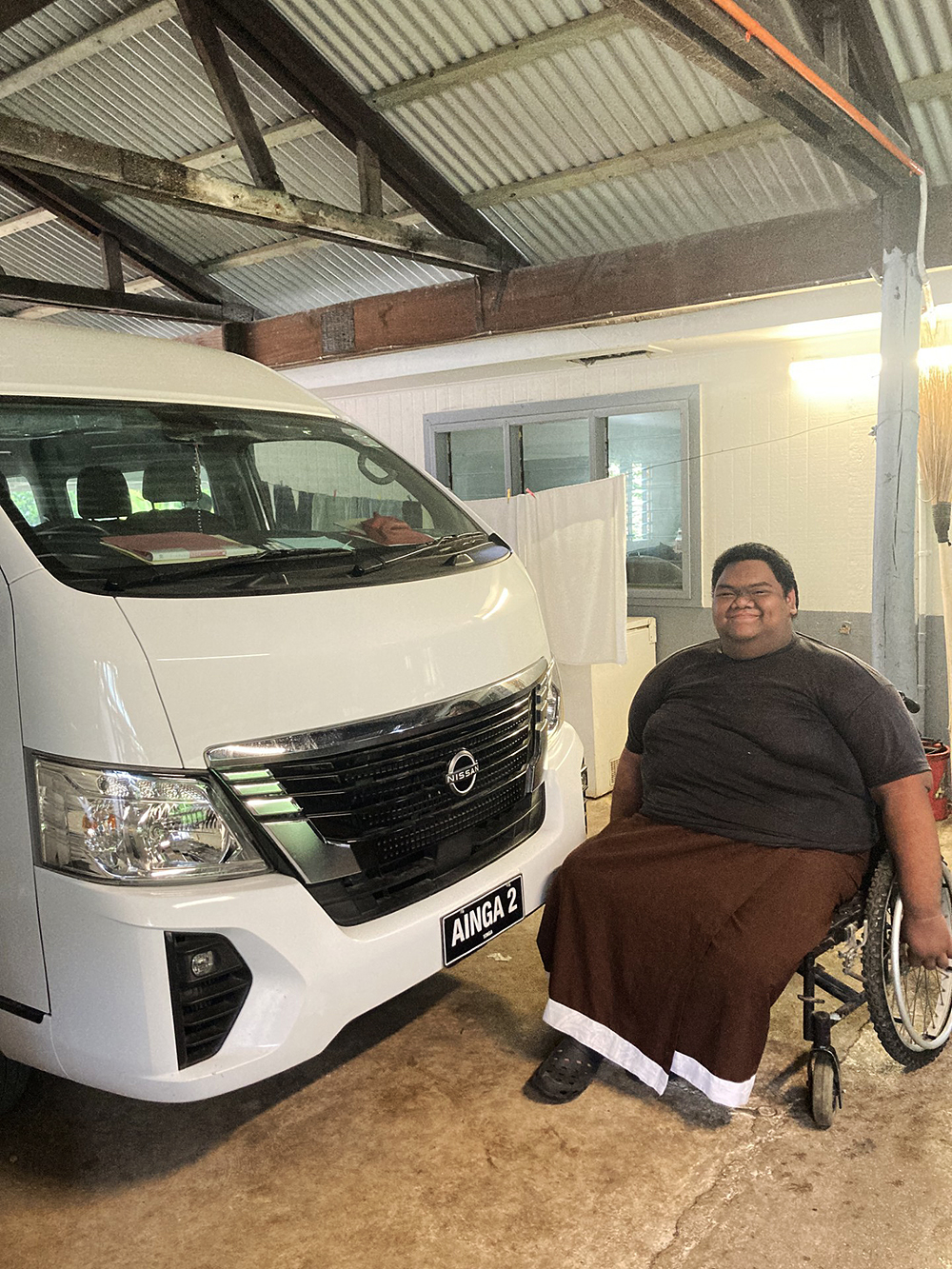
He proudly shared that some of the Centre’s furniture and vehicles had already been funded through the Australian High Commission, including a recently donated wheelchair-accessible van which allows residents to travel into the community and experience greater connection and inclusion with their people.
Yet despite this progress, barriers remain. Paula noted the lack of wheelchair-accessible bathrooms in Tongan public spaces, limit residents’ ability to spend time in the community. He also shared how much the residents enjoy the idea of visiting the beach, though the lack of beach wheelchairs and the shortage of available helpers make this rare. These challenges reinforced to me how accessibility within the built environment remains a daily obstacle for people living with disability in Tonga.
One of the most moving parts of our conversation was Paula’s mention of the community’s “big dream” which was to have an accessible emergency evacuation centre. This is because the current emergency evacuation centre is not accessible and by design, immediately excludes many residents during emergency evacuation scenarios, leaving them vulnerable to further harm during crises. Paula’s words deeply resonated with the sentiments shared earlier at the conference by Rev James Bhagwan – that people with disability are too often the first to be forgotten in times of disaster. His vision for an inclusive and accessible refuge represents far more than physical safety; it is a powerful symbol of dignity, justice, and hope. It is a reminder that people living with disability are not to be overlooked or sidelined, but recognised and valued as equal members of humanity.
In summary, Paula identified the Alonga Centre’s key needs and prayer points as:
- The recruitment of at least three additional volunteers daily (bringing the total to six) to support the 30 residents;
- The creation of an accessible evacuation centre that ensures safety during emergencies;
- The creation of accessible toilets in public spaces ; and
- Increased community and organisational visits to foster inclusion, connection, and love.
From an occupational therapy perspective, several additional needs stood out during my visit. Residents would greatly benefit from the involvement of medical and allied health professionals, including doctors and surgeons to assess and perform cochlear implants, physiotherapists to support a range of motion and mobility issues and occupational therapists to complete seating assessments. Many wheelchair users were observed to have poor postural alignment, and lacked pressure-relieving cushions, placing them at risk of pressure injuries and reduced function over time.
There is also a pressing need for advocacy and practical support to arrange and deliver appropriate medical equipment, therapeutic interventions, and accessible infrastructure. Partnerships with government agencies and international donors could help fund these essential facilities (such as accessible toilets within community spaces) as these are tangible expressions of inclusion that would transform residents’ community inclusion and quality of life.
As I reflect on my visit, I am reminded of the sacredness of every human life as well as the call to serve others just as I have been served by my Heavenly Father. The Alonga Centre is not merely a place of care; it is a home and living testimony of perseverance, faith, and love. Though resources are scarce, Paula is humble, grateful, joyful and openly dependent on God for his daily needs - a spiritual posture I am still working towards.
I am reminded of 1 Corinthians 12:26: “If one part suffers, every part suffers with it; if one part is honoured, every part rejoices with it.”
My prayer is that this meeting will not be the end – that God will continue to stir hearts both locally and globally to see, to respond, and to walk alongside the Tongan disability community in practical ways they have expressed. I know I’ll be having further discussions with Paula to work on the equipment side of things as well as approaching my disability contacts when I return home. I am praying others will feel just as compelled to step out in faith and help tackle some of the other issues raised so that we, as the body of Christ, can show our disability family that we are the hands and feet of Jesus.
If you have skills or resources which could assist The Alonga Centre, please email the Assembly's Communications team.
Kim Muller
8 November 2025
Subscribe to our newsletter
If you want to get the latest news from the Uniting Church in Australia then subscribe to our weekly newsletter delivered to your inbox.
More news from the President
President’s Easter Message 2026
Peace BeWith You Easter messages from the President and Moderators of the Uniting Church in Australia In a world that can feel loud, anxious, and divided, Easter arrives with a quiet but powerful word: peace. This Easter, Rev Charissa Suli, President of the Uniting Church in Australia, offers a message drawn from the heart…
ABC interview: Speaking out on Gendered Violence
Speaking out on Gendered Violence Uniting Church President Rev Charissa Suli recently spoke with ABC Radio on churches’ role in confronting gendered violence and promoting safety, dignity and compassion Subscribe to our newsletter If you want to get the latest news from the Uniting Church in Australia then subscribe to our weekly newsletter…
President reflects on Gendered Violence Conference
Gendered Violence Conference: Restoring what has been bent The President offers this pastoral reflection following The Wesley Centre Theology and Culture Conference on the topic of Gendered Violence By Rev Charissa Suli, President of the Uniting Church in Australia Last month, I attended the Gendered Violence Conference hosted by Rev Associate Professor Robyn Whitaker,…
UCA Leaders gather for key week of discernment
Key week of discernment in shaping the Church’s future Last week, Leaders across the Uniting Church gathered for a pivotal time of meetings, shaping shared vision, national priorities and future direction Leaders from across the Uniting Church in Australia gathered in Sydney last week for a significant series of meetings, marking an important time…
UCA President urges political leaders to back peace and immediate ceasefire
Middle East conflict: UCA President urges Political Leaders to back peace and immediate ceasefire President of the Uniting Church in Australia, Rev Charissa Suli, has written to the Prime Minister, the Leader of the Opposition, the Leader of the Australian Greens and other Australian political party leaders, urging multi-partisan support for the Australian Government to…
President issues statement on Middle East conflict
Middle East conflict: Uniting Church President urges peace and protection of human life STATEMENT FROM THE PRESIDENT OF THE UNITING CHURCH IN AUSTRALIA REV CHARISSA SULI A CALL FOR PEACE AND THE PROTECTION OF HUMAN LIFE As President of the Uniting Church in Australia, I speak with deep concern as violence escalates across the Middle…
A Lenten Invitation from the President
by Rev Charissa Suli, President Uniting Church in Australia Beloved Church, The Lenten season is not about giving up chocolate. It is not about surviving forty days without coffee. If that is all we do, we have missed the invitation. We begin this season in a world that feels tense and fragile. There…
Fairness, not just Growth, is the key to Productivity
Fairness, not just growth, is the key to productivity As the Federal Government sharpens its focus on productivity, President Rev Charissa Suli contends that it must be grounded in fairness, justice and human dignity to truly strengthen Australia’s economySubscribe to our newsletterIf you want to get the latest news from the Uniting Church in Australia…