

13 October 2026
A reflection on National Mental Health Week from the Secretary-General, Andrew Johnson.
Read more about the initiatives around Mental Health at the National Mental Health Commission and about global efforts at the UN World Mental Health Day page.
Eight days without sleep. A head filled with ideas. Not feeling tired. Talking quickly. A constant stream of thoughts.
What was going on?
I could tell that something was not right. But no matter how hard I tried, I could not sleep or slow down.
I knew from my family history that anxiety and depression were part of the picture. But this was different. It did not fit the patterns I knew.
I sought medical help. Over the months that followed, with the support of my GP, psychologist and psychiatrist, I began to understand what I had experienced.
Last year, I was diagnosed with bipolar II disorder.
Bipolar II is characterised by episodes of depression and periods of hypomania. For me, receiving the diagnosis helped make sense of experiences that had previously been confusing. It also meant developing a plan with the health professionals who support me, including medication and paying careful attention to the rhythms of sleep, exercise, stress and rest.
But a diagnosis does something else. It gives a name to one part of your life.
And there is a danger that the name becomes the person.
As we come to the end of Mental Health Week, that is something I want us as a Church to challenge.
A mental health diagnosis does not define a person’s gifts, dignity, vocation or belonging.
As a society, we have become better at expressing sympathy and support for people experiencing mental ill-health. Yet stigma remains. Sometimes it is overt. More often, perhaps, it appears in the assumptions we make about what someone can do, what responsibilities they can carry, or whether their judgement, contribution or vocation should now be understood differently.
Mental illness can significantly affect a person’s capacity to work, participate or serve, either for a period or over the longer term. When that happens, our response should not be to measure someone’s worth by their productivity. We should be a Church that makes reasonable accommodations, offers genuine support and continues to recognise the gifts and dignity of each person.
For others, including me, living with a mental health condition can sit alongside continuing to work, lead, contribute and serve.
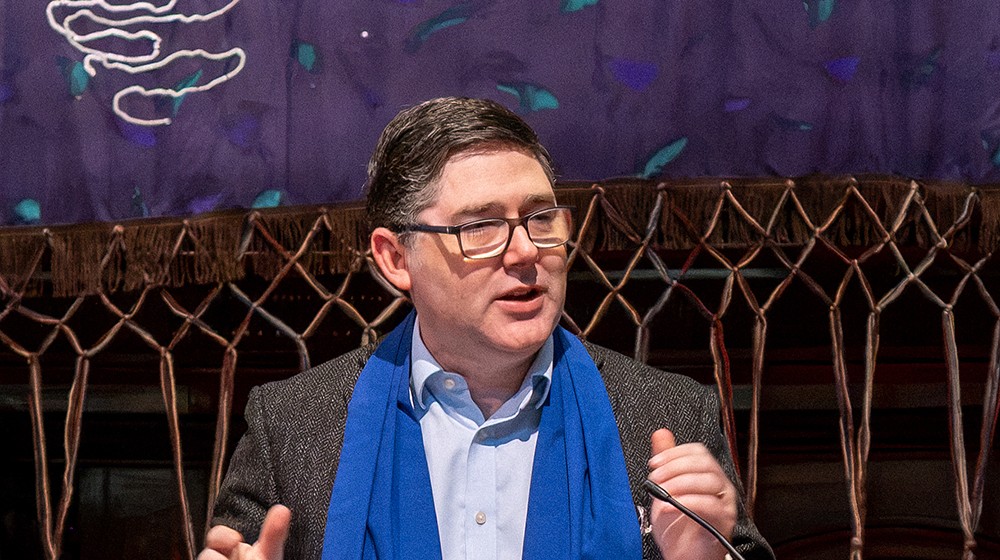
I am the General Secretary of the Assembly. I also live with bipolar II.
Both of those things are true about me. Neither tells you the whole story of who I am.
There are times when managing my mental health requires particular attention and care. I have a mental health plan developed with the health professionals who support me. I have become more attentive to warning signs and to the importance of rhythms of work and rest.
But bipolar II does not erase my gifts or my calling. Nor does somebody else’s experience of mental illness diminish theirs.
Paul writes in 2 Corinthians 4:7:
“We have this treasure in clay jars.”
I have come to hear those words differently.
We are all clay jars.
None of us exercises ministry from a place of complete strength, certainty or self-sufficiency. Our vulnerability is not an aberration from the human condition. It is part of it.
And the extraordinary thing about Paul’s image is not the quality of the vessel. It is the treasure it carries and the power that belongs to God.
Our experiences of mind and body are different. Some of us live with illness or disability. Some experience periods of profound struggle. Some carry vulnerabilities that are visible and others carry things that few people ever see.
None of these things determines our dignity or our belonging in the body of Christ.
This year’s theme for Mental Health Week is Together We Thrive.
As an Assembly, our vision includes Thriving Communities: a local, national and global Church connected together in Christ.
For me, thriving communities are not communities in which everyone is well, strong or endlessly productive. They are communities in which we recognise one another as whole people; where vulnerability can be spoken about without shame; where support is available when it is needed; and where people’s gifts, dignity, vocation and belonging are not defined by a diagnosis.
I live with bipolar II.
It is part of my story. It is not the whole of my story.
We are called to be a Church where this is true for all of us: where no diagnosis defines our gifts, our dignity, our vocation or our belonging in the body of Christ.