
Latest roundtable highlights practical steps to Net Zero
From emissions tracking to local renewable energy projects, the Uniting Church’s second Climate Action Roundtable showcased practical, collaborative action towards achieving Net Zero emissions by 2040
July 2, 2026
Subscribe to our newsletter
If you want to get the latest news from the Uniting Church in Australia then subscribe to our weekly newsletter delivered to your inbox.
Around 60 people from across Australia gathered online last month for the Uniting Church’s second Climate Action Roundtable, sharing practical initiatives, innovative projects and collaborative approaches to help the Church achieve its commitment to Net Zero emissions by 2040.
Under the theme Practical Steps toward Net Zero by 2040, the Roundtable showcased how congregations, Synods and agencies are already taking meaningful action to reduce emissions while strengthening communities.
Opening the gathering with prayer and an Acknowledgement of Country, Uniting Church President Rev Charissa Suli reflected on her recent visit to Tuvalu, where communities are confronting the devastating impacts of rising sea levels and increasingly severe climate events.
“The people of Tuvalu are facing a human reality with courage and hope,” she said, challenging participants to consider how do we love our neighbour?.
Rev Suli reminded participants that Christian discipleship calls the Church to stand alongside communities bearing the greatest burdens of climate change. She also shared details of a new partnership agreement between the Uniting Church in Australia and the church in Tuvalu, reaffirming the Church’s commitment to walking alongside Pacific neighbours facing an uncertain future.
She encouraged participants to continue working together in the shared ministry of climate justice.
The first presentation focused on one of the foundations of effective climate action: understanding and measuring emissions.
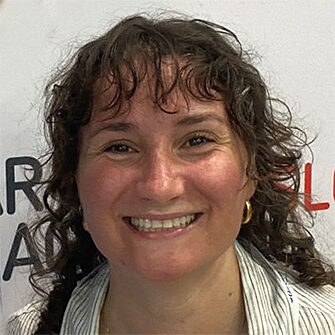
Emily Murray, Environmental Sustainability Specialist with the Queensland Synod, and Zoe Smith, Environmental Sustainability Manager at Uniting Communities South Australia, introduced work underway to establish a national carbon emissions baseline across congregations, schools and agencies.
Emily explained that measuring greenhouse gas emissions is essential to tracking progress and identifying where the greatest opportunities for emissions reduction exist.
“We cannot manage what we cannot measure,” she said, noting that consistent reporting will help develop a national roadmap for emissions reduction across the Church.
Zoe outlined the complementary Offsets Feasibility Study, recognising that while emissions can be significantly reduced, some will remain unavoidable by 2040.
Potential offset opportunities include reforestation on Church-owned land or land managed by members in rural communities, as well as projects drawing on First Peoples’ knowledge, including cultural burning practices.
Participants welcomed the presentation and expressed strong support for practical action, with examples already emerging across the Church, including work underway through South Australia’s Effective Living Centre.
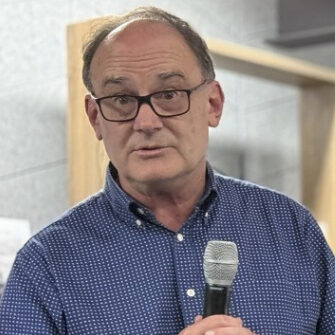
The Roundtable then heard from Trevor Brown of Armidale Uniting Church, who shared how one regional congregation is responding to climate change through projects that combine environmental sustainability with social justice.
Under the theme Caring for People, Caring for Creation, Trevor posed a key question driving the congregation’s work, “What does it look like for a congregation to participate meaningfully in the energy transition, especially alongside those in the community who might otherwise be left behind?”.
Recognising that many households are facing both rising living costs and increasing climate pressures, Armidale Uniting Church is exploring practical ways to ensure vulnerable people benefit from the transition to renewable energy.
One project aims to electrify the church property and move it towards Net Zero emissions, with plans to share surplus renewable energy with neighbouring properties and vulnerable households where possible.
A second initiative, Equity Energy Upgrades for Vulnerable Households in Armidale, will provide advice and practical support to at least 100 households with the assistance of 20 trained volunteers. Running through to June 2027, the project seeks to reduce energy stress, improve household comfort and demonstrate the need for government investment to ensure the renewable energy transition is equitable.
The congregation is also developing practical household resources and has launched the innovative Thread Shed project, which will provide curtains to improve home insulation alongside winter clothing for people experiencing hardship.
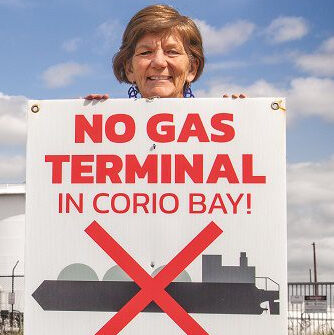
The final presentation showcased the Victorian and Tasmanian Synod’s Synod Emissions Reduction Fund (SERF), presented by Sue Strong from the Synod Climate Action Taskforce.
Established in 2023 with an initial investment of $100,000 from Synod Property Services, SERF provides grants to congregations for projects that deliver measurable emissions reductions.
The first funding round attracted 33 applications, with grants assessed according to their projected emissions savings and overall value. Sue noted that manses and church halls often provide some of the greatest opportunities for reducing emissions because they are used more frequently than worship spaces.
Following the success of the inaugural round, the program expanded in 2025 through matched funding from the Synod alongside generous contributions from Presbyteries, congregations and individuals, creating a funding pool of $150,000. Twenty-eight congregations applied for grants in the latest round.
Beyond the emissions reductions themselves, Sue reflected that one of the project’s greatest achievements has been strengthening relationships with congregations and encouraging local communities to explore additional funding opportunities and partnerships.
She concluded with a simple but encouraging reminder that “everyone can make a difference”.
Further information
Details about the Synod Emissions Reduction Fund (SERF) can be obtained through Sue Strong or Barrie May.
The Environmental Action Group in South Australia can be contacted through Brian Polkinghorne.
The Synod of WA's new Missional Property Fund Net Zero Grant offers funding of up to 80% of project costs for places of worship and up to 50% for manses in Western Australia.
The Guidelines for Reducing Greenhouse Gases from Church Properties resource to support congregations to make applications is available through Richard Arnold.
There is much information available on the recording of the Roundtable.
You can view it here, using the code: y3Q5j+@S

Rev Charissa Suli
Emily Murray
Trevor Brown
Sue Strong
More news from the Assembly
President's Pastoral Prayer for Pope Leo XIV
President’s Pastoral Prayer for Pope Leo XIV By President Rev Charissa SuliAs we hold Pope Leo XIV in our prayers during this time of illness and recovery, we join with our Catholic siblings in Christ or Catholic Community around the world expressing our ecumenical solidarity and care. As part of the wider Christian Church, we share…
'We are all clay jars' - a reflection on National Mental Health Week
13 October 2026 A reflection on National Mental Health Week from the General Secretary, Andrew Johnson. Read more about the initiatives around Mental Health at the National Mental Health Commission and about global efforts at the UN World Mental Health Day page. Eight days without sleep. A head filled with ideas. Not feeling tired.…
A Covenant that changes us
By Michael ZewdieInaugural Rev Dr Michelle Cook Lecture connects deep listening with the call to share power, enact justice and learn together.“Covenant is not a statement the church makes about relationship. Covenant is a relationship that changes the church.” — Rev Ken SumnerSubscribe to our newsletterIf you want to get the latest news from the…
Hannah Jackson Commissioned to Lead National Advocacy and Justice Ministry
The National Assembly’s Director of Advocacy and Justice, Hannah Jackson, was commissioned during worship at her home congregation, Ipswich Uniting Church in Queensland on Sunday. Led by Assembly General Secretary Andrew Johnson, the service featured a sermon from Uniting Church in Australia President Rev Charissa Suli, drawing on the theme “Built Together” as part of…
A confident nation does not fear diversity - President's statement on immigration policy
7 October, 2026 Immigration policy sits at the core of who we are as a country, and the kind of Australia we want to be. This week’s Coalition policy announcement advocating significantly reduced net overseas migration is deeply concerning because of its implications for our cultural diversity and our identity as a nation. As Australians…
Three years on: A message and prayer for peace
Three years on: A message and prayer for peace Image: Church of the Ascension, seen from the Mount of Olives in Jerusalem. Photo by Albin Hillert/WCC A pastoral message from Rev Charissa Suli, President of the Uniting Church in Australia, on the third anniversary of the 7 October attacks in Israel…
Uniting Church urges Australia to stand with Pacific on fossil fuels
Uniting Church President Rev Charissa Suli has urged Prime Minister Anthony Albanese to turn Australia’s commitment to its Pacific neighbours into action by backing a global treaty to phase out fossil fuels. Rev Suli is among 80 senior Australian faith leaders who have signed an open letter calling on the Prime Minister to support a…
Kulini… Are you listening?
Kulini… Are you listening?Northern Synod gathers for four days of worship, deep listening and discernment By Micheal ZewdieThe 48th Northern Synod brought members of the Uniting Church together in Darwin for four days of worship, conversation, discernment and celebration, with the invitation “Kulini… are you listening?” providing a thread through the gathering.“The invitation at the heart…